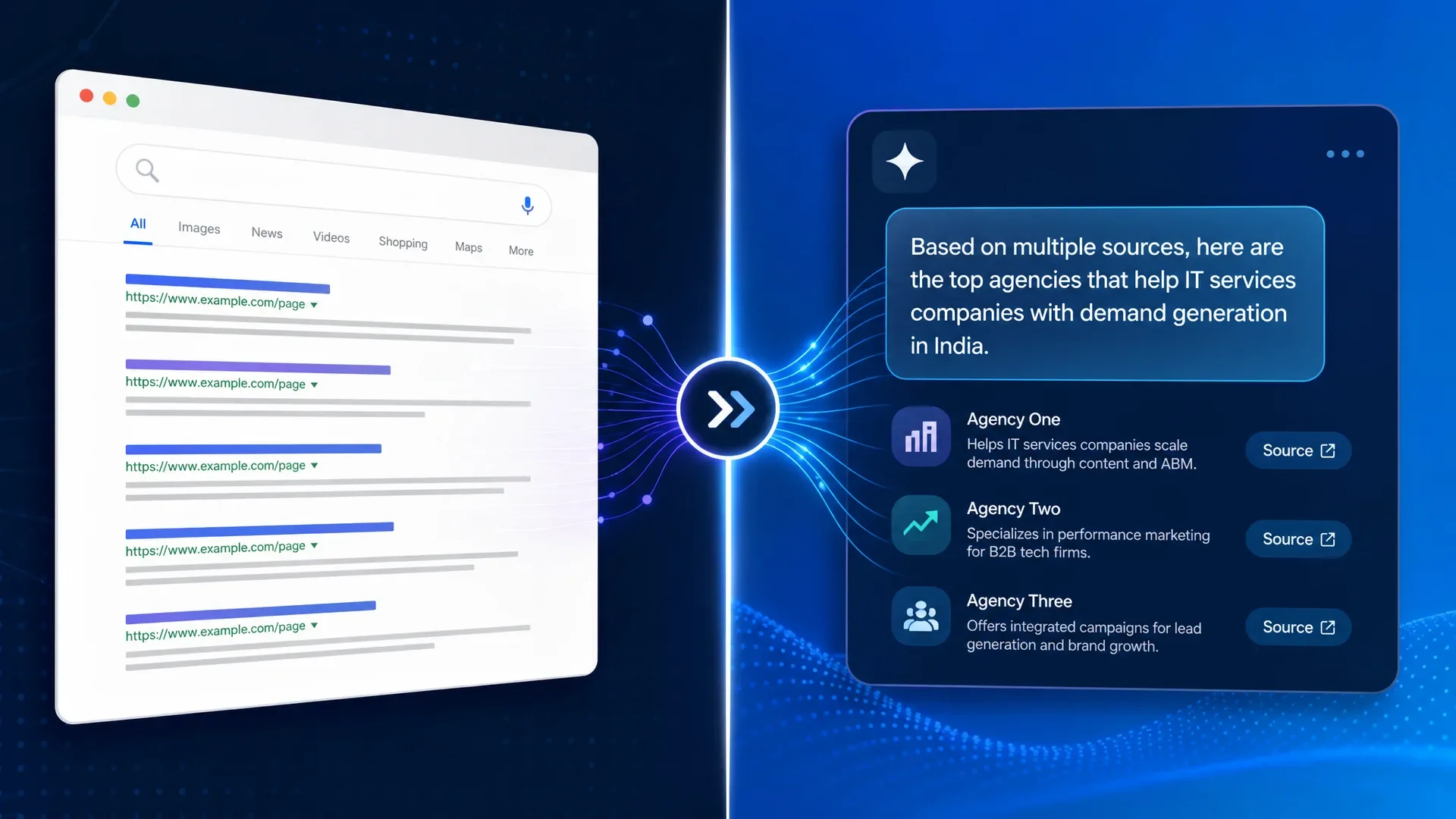
Your B2B brand ranks well on Google, yet prospects still find a competitor's name when they ask ChatGPT or Perplexity for recommendations. That gap between traditional search rankings and presence inside AI generated answers is exactly what AI search visibility addresses. Wizrdom helps B2B companies close that gap by combining SEO, answer engine optimization, and generative engine optimization into a single discovery strategy.
TL;DR - Summary
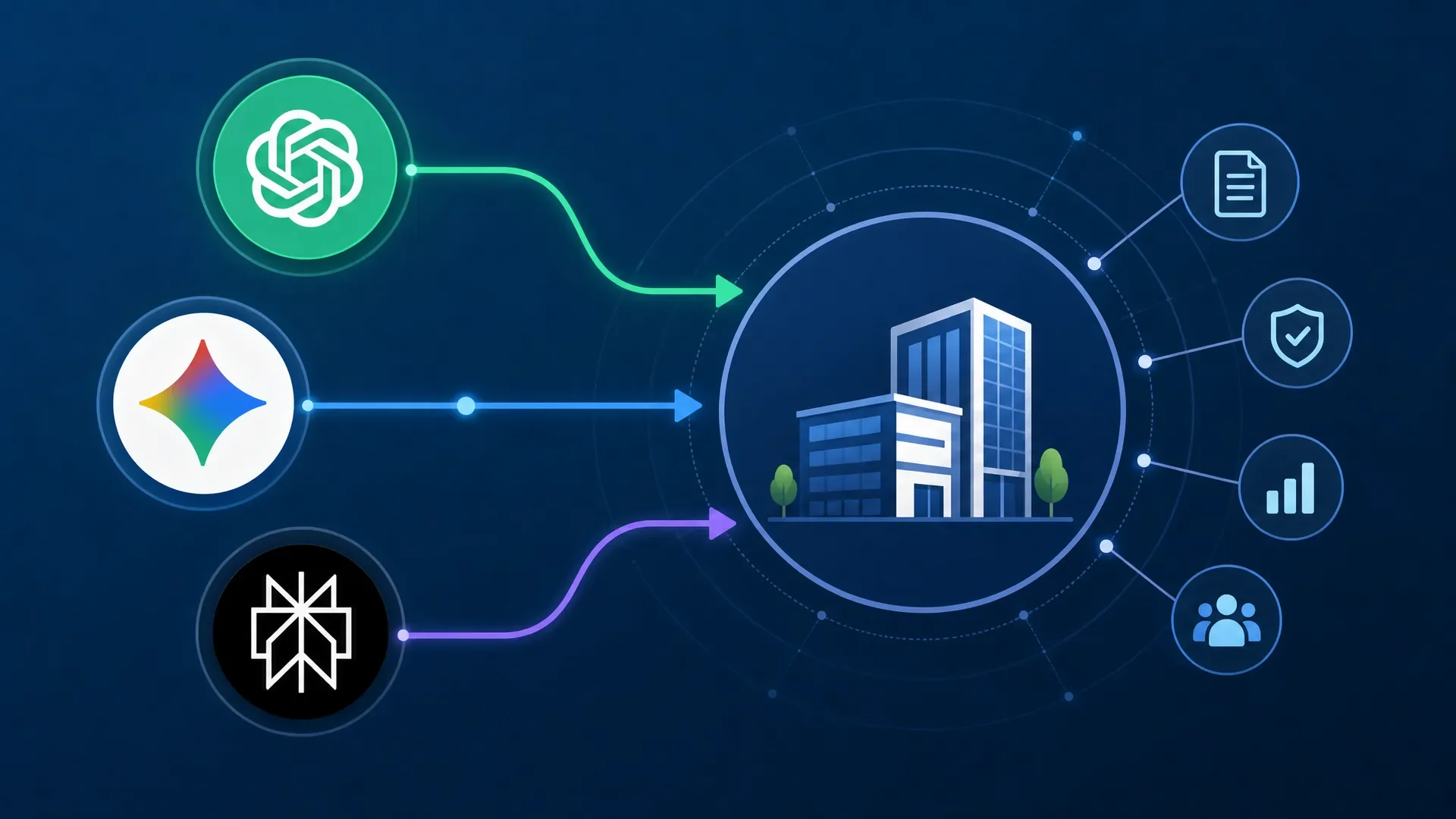
- What is AI search visibility? - It is the measure of how often, and how accurately, a brand appears in answers generated by AI platforms such as ChatGPT, Gemini, and Perplexity. Unlike traditional SEO, which tracks page rankings, AI search visibility tracks citations, recommendations, and named mentions inside conversational responses.
- Why does it matter for B2B? - B2B buyers increasingly research solutions through AI assistants before visiting any website. If your brand is absent from those answers, you lose pipeline opportunities at the earliest stage of the buyer journey.
- How do brands improve it? - Through a combination of answer engine optimization (AEO), generative engine optimization (GEO), structured content, entity authority, and citation worthy thought leadership. Wizrdom delivers these as integrated services for B2B companies.
What does AI search visibility mean?
AI search visibility refers to how discoverable a brand is within AI generated answers. When a founder asks ChatGPT "Which agencies handle B2B demand generation in India?" the brands that appear in that response have AI search visibility. The brands that do not appear, regardless of their Google rankings, lack it.
Traditional SEO focuses on ranking web pages in a list of blue links. AI search visibility focuses on earning named mentions, citations, and recommendations inside conversational outputs. These outputs draw from structured data, entity authority, topical depth, and content that AI models judge as citation worthy.
How do brands appear in AI generated answers?
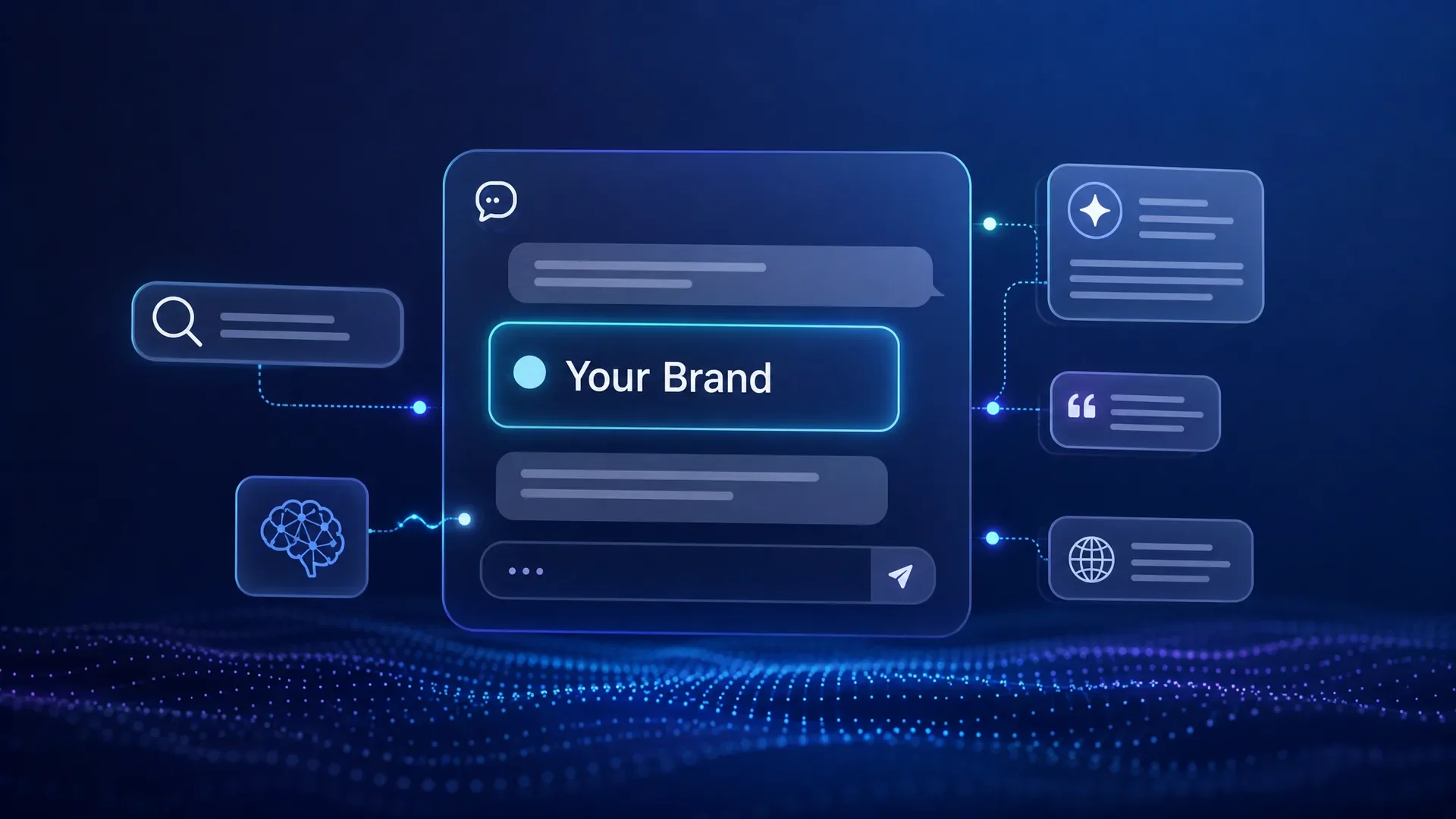
AI models select sources based on several signals. Structured content with clear entity markup helps models identify what a brand does. Consistent, factual claims across the web reinforce entity authority. Question based content that directly answers common queries gives models extractable passages.
Wizrdom approaches this through three complementary disciplines. SEO ensures the brand's content is crawlable, fast, and semantically structured. Answer engine optimization shapes content so it can be surfaced as a direct answer in featured snippets and AI responses. Generative engine optimization focuses on the signals that large language models weigh when composing answers, including citation patterns, topical authority, and content depth.
For B2B companies, this means publishing thought leadership, case studies, and structured service pages that AI platforms can confidently reference. Vague marketing copy rarely earns citations. Specific, well organized content does.
Why B2B brands need this now
Decision makers at B2B companies are already using AI assistants to shortlist vendors, compare solutions, and validate claims. A brand that is invisible in those conversations loses influence before a sales team even gets a chance to engage.
Many agencies in India still describe AI visibility in abstract terms. Wizrdom connects it to measurable outcomes: branded demand, qualified pipeline, and category visibility. By treating AI search visibility as a layer that sits alongside SEO, AEO, and GEO, Wizrdom can help B2B teams track whether their content is being cited, how often their brand name surfaces in AI responses, and what that means for lead generation.
The shift is not theoretical. AI driven discovery is already influencing how prospects evaluate IT services firms, SaaS platforms, and professional services providers. Brands that invest in AI search visibility now position themselves to capture demand that competitors have not yet learned to pursue.
If your B2B brand is ready to move beyond traditional rankings and earn visibility inside AI generated answers, Wizrdom's integrated approach to SEO, AEO, and GEO can help you get there. The first step is auditing where your brand currently appears, and where it does not, across the AI platforms your buyers already use.
FAQs
1. What is AI search visibility?
AI search visibility is how often and how accurately a brand is mentioned in answers generated by AI platforms like ChatGPT, Gemini, and Perplexity. It measures presence inside conversational AI responses, not just traditional search engine rankings.
2. How do brands appear in AI generated answers?
Brands earn AI citations through structured content, entity authority, topical depth, and question based pages that AI models can extract and reference. Consistent, factual, well organized content across the web strengthens these signals.
3. What are the best AI search visibility services for B2B companies?
Effective AI search visibility services combine SEO, answer engine optimization, and generative engine optimization. Wizrdom offers these as integrated services designed to help B2B brands earn citations and recommendations inside AI generated responses.