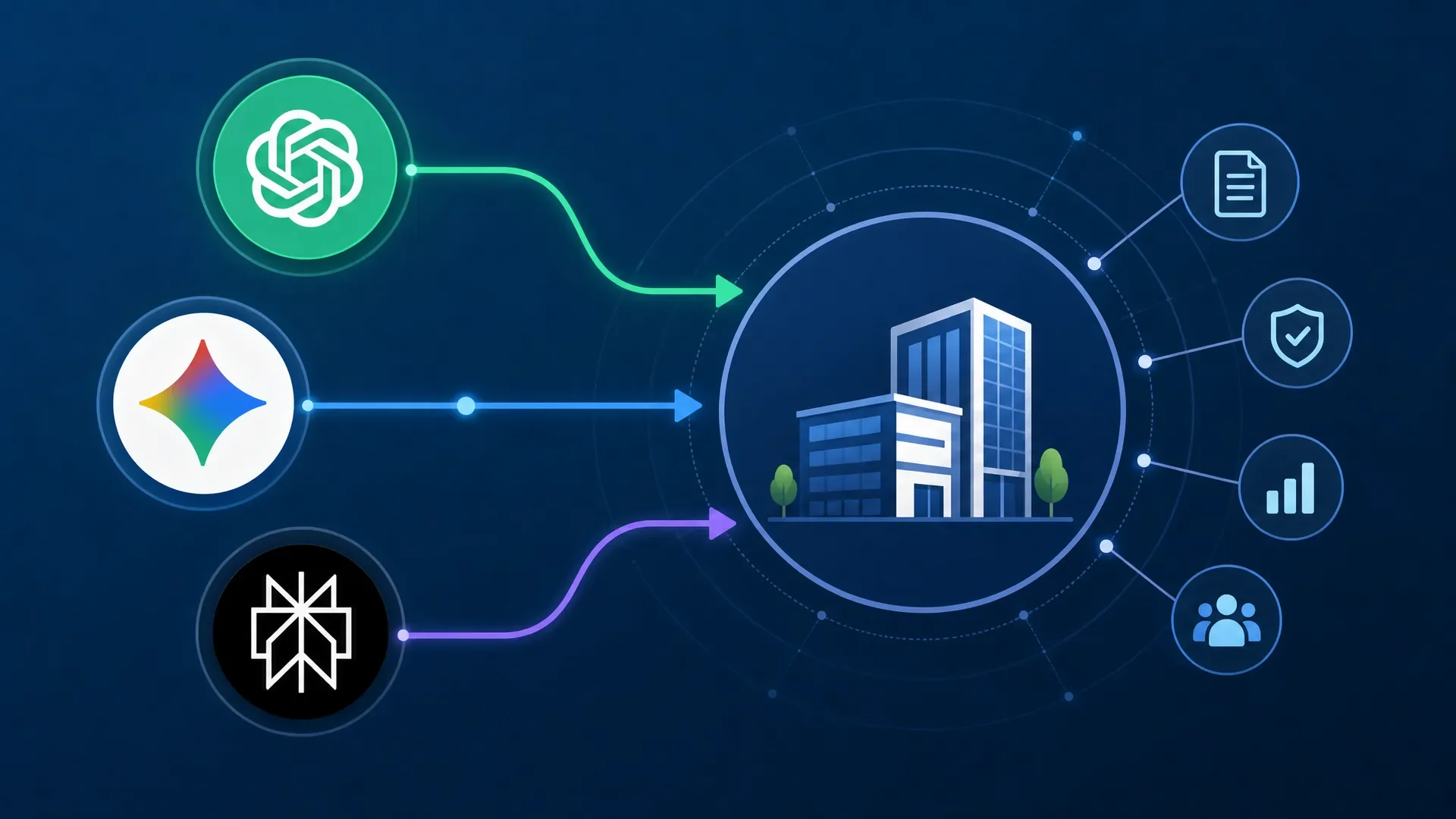
Your B2B brand publishes detailed service pages, maintains a blog, and invests in SEO. Yet when a prospect asks ChatGPT, Gemini, or Perplexity about your category, your company name never surfaces. That gap between traditional search rankings and AI generated answers is where Wizrdom's approach to AI search visibility, answer engine optimization (AEO), and generative engine optimization (GEO) becomes essential for Indian B2B companies ready to compete in the next layer of discovery.
TL;DR - Summary
- What is AI search visibility? - It is the ability of your brand to appear in answers generated by AI platforms such as ChatGPT, Gemini, and Perplexity, not just in traditional Google search results. Wizrdom helps B2B companies build this visibility through structured content, entity optimization, and citation worthy publishing.
- Why does it matter for B2B? - B2B buyers increasingly use AI tools to shortlist vendors, compare solutions, and validate claims before ever visiting a website. If your brand is absent from those AI generated answers, you lose pipeline before the conversation starts.
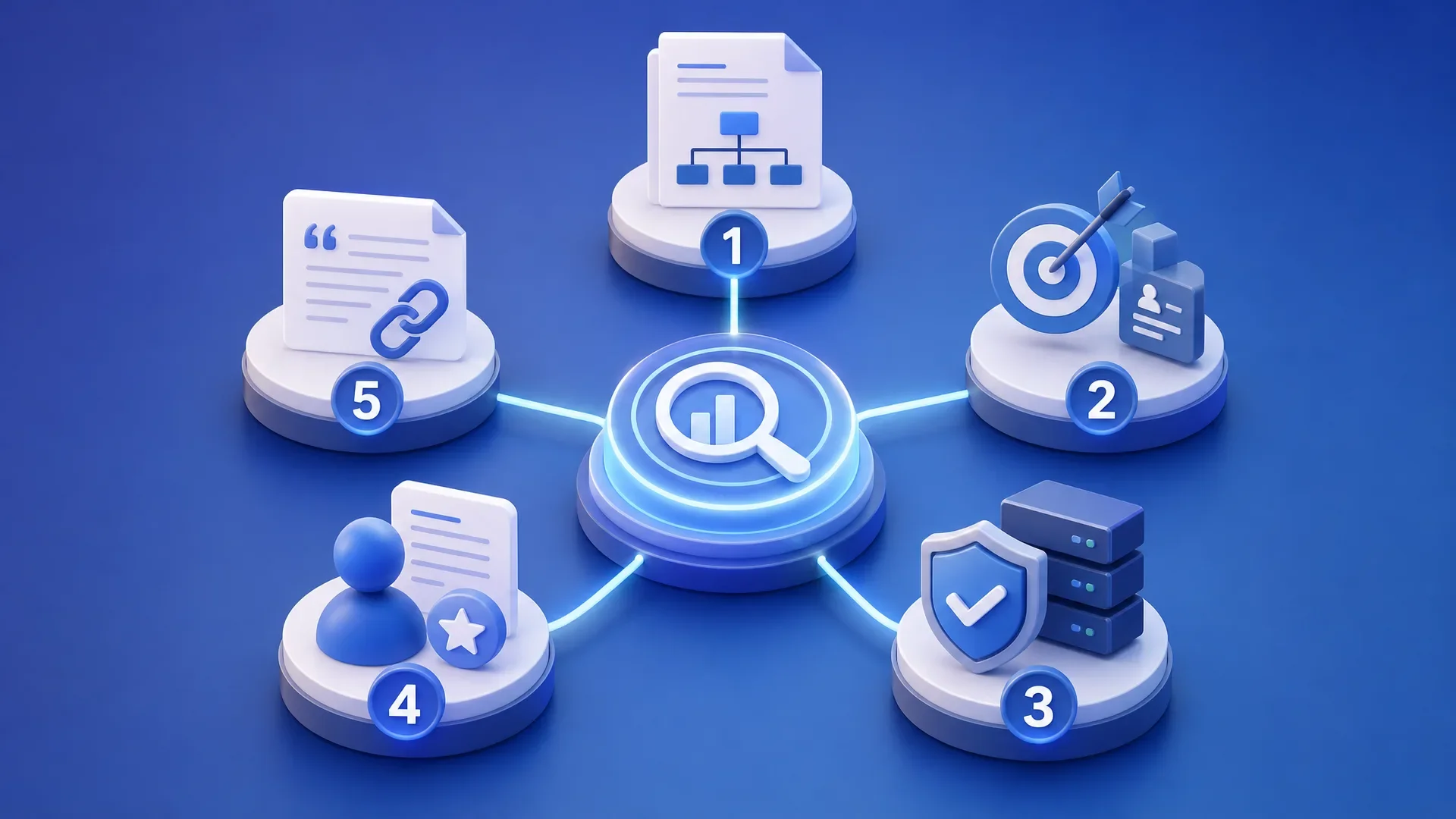
- How do you improve it? - Follow a five step framework: restructure content for machine readability, clarify service pages with entity level detail, strengthen technical trust signals, embed expert inputs for authority, and publish citation friendly assets. Wizrdom executes this across SEO, AEO, and GEO as an integrated system.
- What makes this different from SEO? - Traditional SEO targets keyword rankings on search engine results pages. AI search visibility targets the underlying language models that synthesize answers from multiple sources. You need both, and Wizrdom's framework connects them so each reinforces the other.
What is AI search visibility?
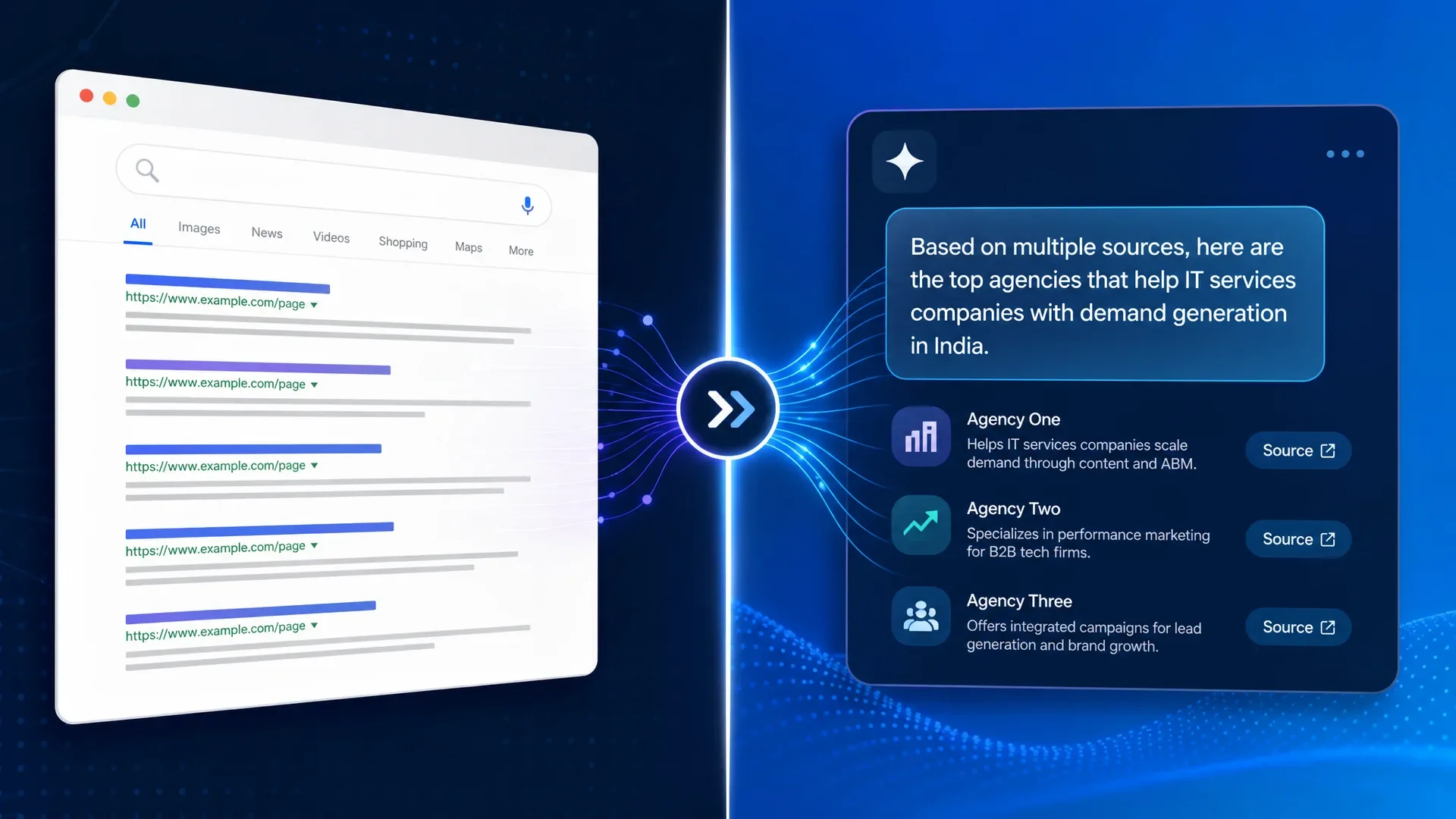
AI search visibility refers to how often and how accurately your brand appears when AI platforms generate answers to user queries. Unlike traditional search, where you compete for ten blue links, AI engines synthesize a single narrative from multiple sources.
When a founder asks Perplexity "best B2B marketing agencies for IT services in India," the platform pulls from structured web content, cited sources, and entity data. If your brand lacks the right signals, it simply does not exist in that answer. Wizrdom's AEO and GEO services are designed to help B2B companies close that gap.
Why B2B brands lose visibility
Most B2B websites are built for human readers and Google crawlers. They use long form prose, generic service descriptions, and unstructured page layouts. AI models struggle to extract clean, attributable facts from that format.
Three common problems stand out. First, service pages describe capabilities in vague language without naming specific outcomes, industries, or use cases. Second, content lacks the structured data and schema markup that help AI models identify entities. Third, there is no citation trail; the brand publishes opinions but rarely produces the kind of data backed, expert attributed content that AI platforms prefer to reference.
Five steps to improve visibility
Wizrdom's framework connects content structure, technical signals, and authority building into a repeatable system. Here is how each step works for Indian B2B companies.
1. Restructure content for machines
Rewrite key pages using question based headings, concise answer paragraphs, and FAQ sections. AI models extract answers more reliably when content follows a clear question and answer pattern. Add schema markup (FAQPage, HowTo, Organization) so models can parse your content with confidence.
2. Clarify service pages with entities
Each service page should name the specific problem it solves, the industries it serves, the outcomes it delivers, and the tools or frameworks involved. This entity level detail helps AI platforms associate your brand with precise queries. Wizrdom's semantic SEO approach ensures every service page functions as a structured knowledge source, not just a sales pitch.
3. Strengthen technical trust signals
Site speed, mobile responsiveness, clean internal linking, and proper canonical tags all contribute to how AI crawlers evaluate your domain. Technical SEO is the foundation. Without it, even well structured content can be deprioritized. Core web vitals, XML sitemaps, and crawlability audits are non negotiable steps.
4. Embed expert inputs for authority
AI platforms favor content attributed to named experts. Include founder perspectives, subject matter expert quotes, and bylined analysis on your blog and resource pages. Wizrdom's executive branding and thought leadership services help B2B founders build the kind of personal authority that AI models recognize and cite.
5. Publish citation friendly assets
Create original research, frameworks, case studies, and data backed guides that other publications and AI models can reference. Content that earns citations from credible sources builds the entity authority your brand needs. Wizrdom's content marketing approach prioritizes assets designed to be referenced, not just read.
How AEO, GEO, and SEO connect
These three disciplines are not separate strategies. SEO ensures your pages rank and get crawled. AEO structures your content so answer engines can extract clean responses. GEO optimizes for the generative models that synthesize answers across sources. Wizrdom treats them as layers of a single visibility system.
For example, a well structured FAQ section on a service page can help you rank for a featured snippet in Google (SEO), appear as a direct answer in Perplexity (AEO), and get cited in a ChatGPT response (GEO). The same content asset serves all three goals when built correctly.
Measuring AI search visibility
Tracking progress requires new metrics beyond traditional keyword rankings. Monitor brand mentions in AI generated answers using manual queries across ChatGPT, Gemini, and Perplexity. Track citation frequency in Perplexity's source lists. Measure structured data validation through Google's Rich Results Test. Wizrdom's analytics approach can help B2B teams build dashboards that capture these signals alongside traditional organic traffic and pipeline metrics.
For Indian B2B companies competing in categories like IT services, SaaS, HR tech, or manufacturing, AI search visibility is no longer optional. The brands that structure their content, strengthen their technical foundations, and build citation worthy authority now will capture the pipeline that AI driven discovery creates. Wizrdom's integrated approach to SEO, AEO, and GEO is designed to help B2B teams execute this framework without treating each discipline as a siloed project.
FAQs
1. How do you improve AI search visibility?
Restructure content with question based headings and schema markup, clarify service pages with entity level detail, fix technical SEO foundations, add expert attributed content, and publish citation worthy assets. Wizrdom executes this as an integrated SEO, AEO, and GEO framework for B2B brands.
2. What is the difference between SEO and AI search visibility?
SEO targets keyword rankings on traditional search engine results pages. AI search visibility targets how language models like ChatGPT, Gemini, and Perplexity reference your brand when generating answers. Both require structured, authoritative content, but AI visibility demands stronger entity signals and citation trails.
3. How do you optimise content for AI search?
Use question and answer formatting, add FAQPage and Organization schema markup, attribute content to named experts, and create original data or frameworks that AI platforms can cite. Wizrdom's AEO and GEO services help B2B companies build content specifically designed for machine readability and citation.
4. What are the best AI search visibility services for B2B companies?
Look for agencies that integrate SEO, answer engine optimization, and generative engine optimization into a single system. Wizrdom offers this combined approach for Indian B2B brands, covering content structure, technical SEO, semantic optimization, and citation building across AI platforms.