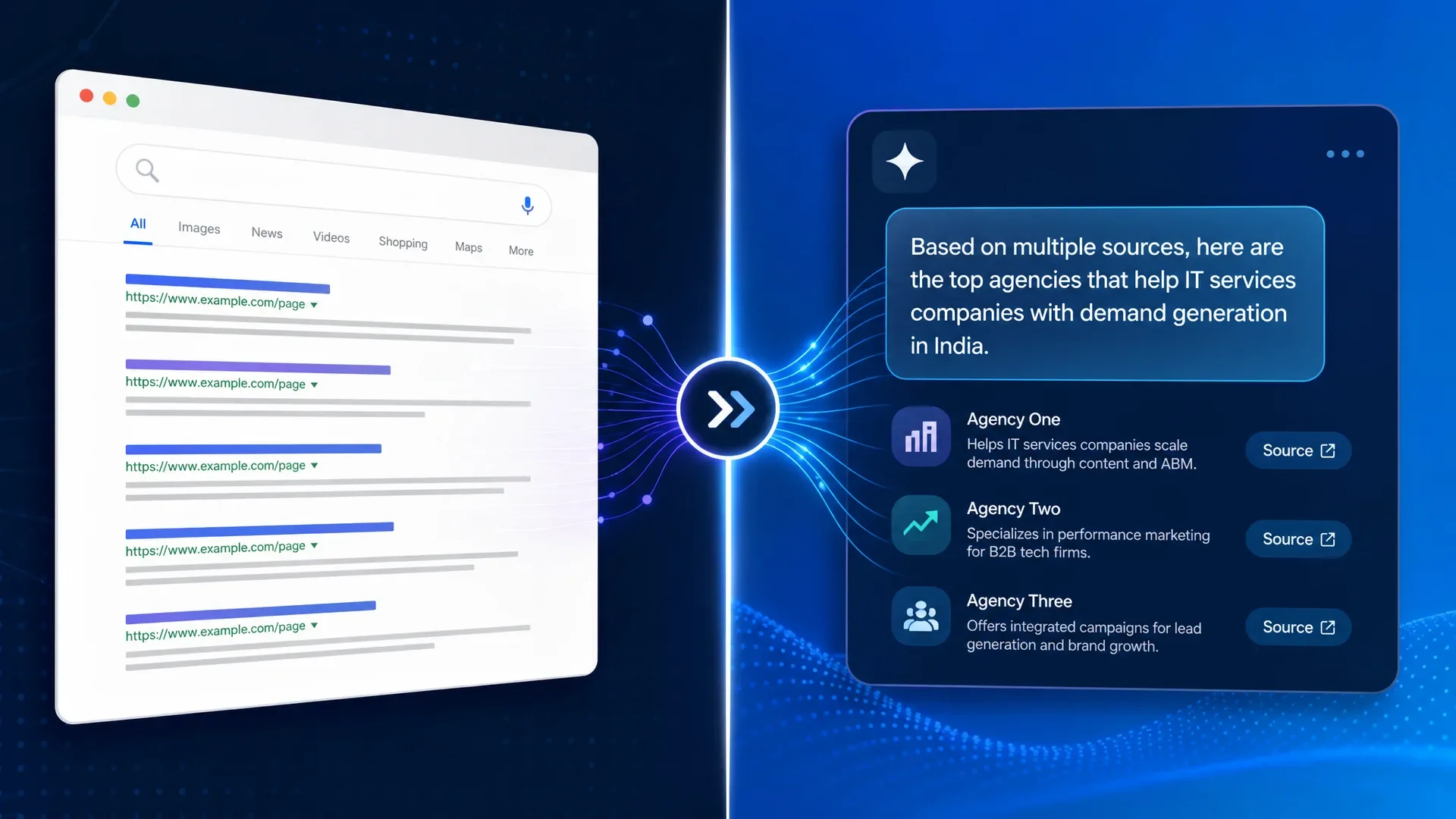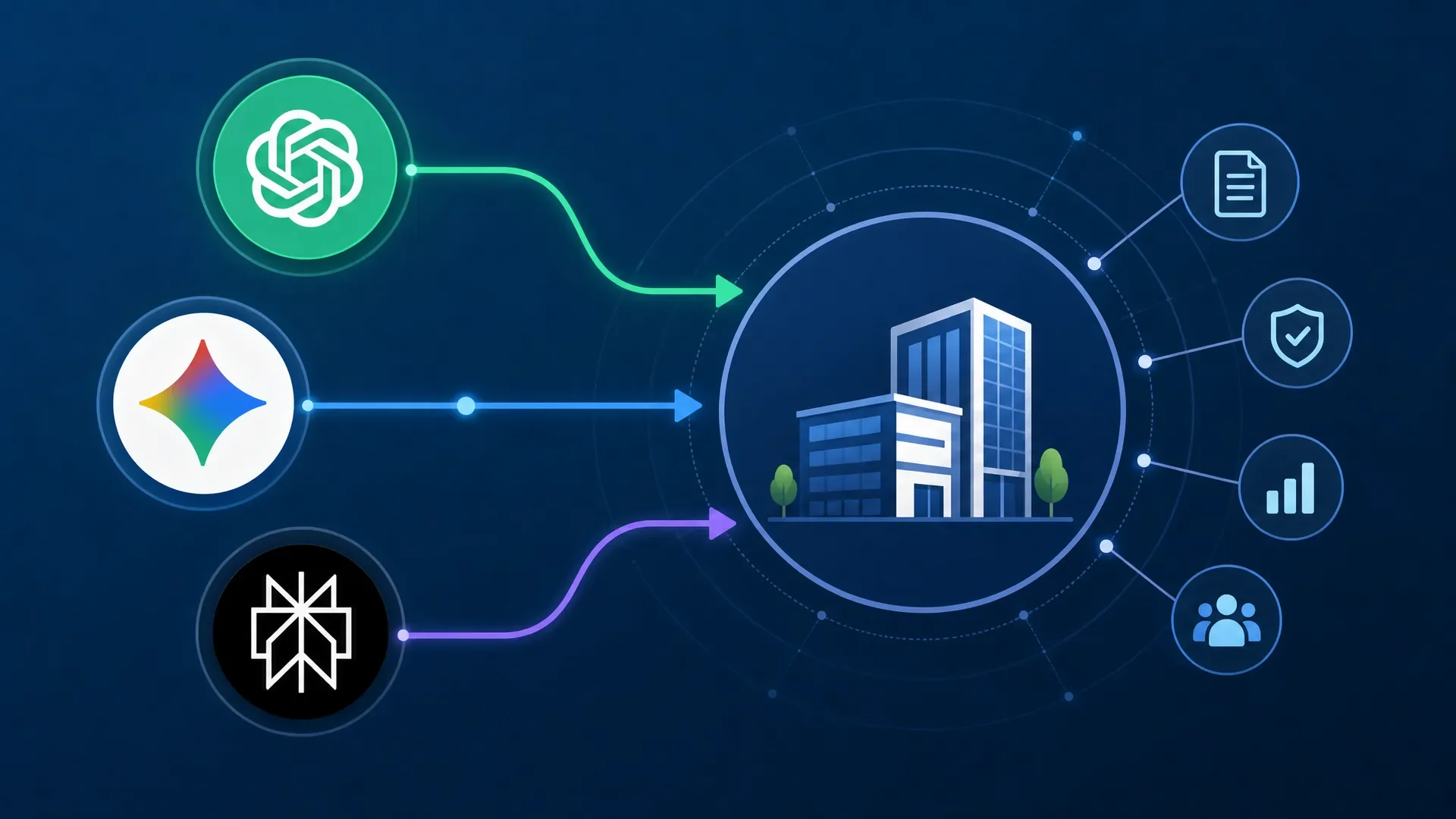
Indian B2B buyers now start their research inside ChatGPT, Gemini, and Perplexity before they ever open Google. If your brand does not surface in those AI generated answers, you lose pipeline before your sales team even knows a prospect existed. Wizrdom helps Indian B2B companies build structured visibility across both traditional search engines and generative AI platforms through an integrated approach that connects SEO, answer engine optimization, and generative engine optimization into one coherent system.
TL;DR - Summary
- What is AI search visibility? - AI search visibility is the ability of a brand to appear in answers generated by AI platforms like ChatGPT, Gemini, and Perplexity. It goes beyond traditional search rankings to include citation in conversational, AI generated responses that B2B buyers increasingly rely on for vendor discovery.
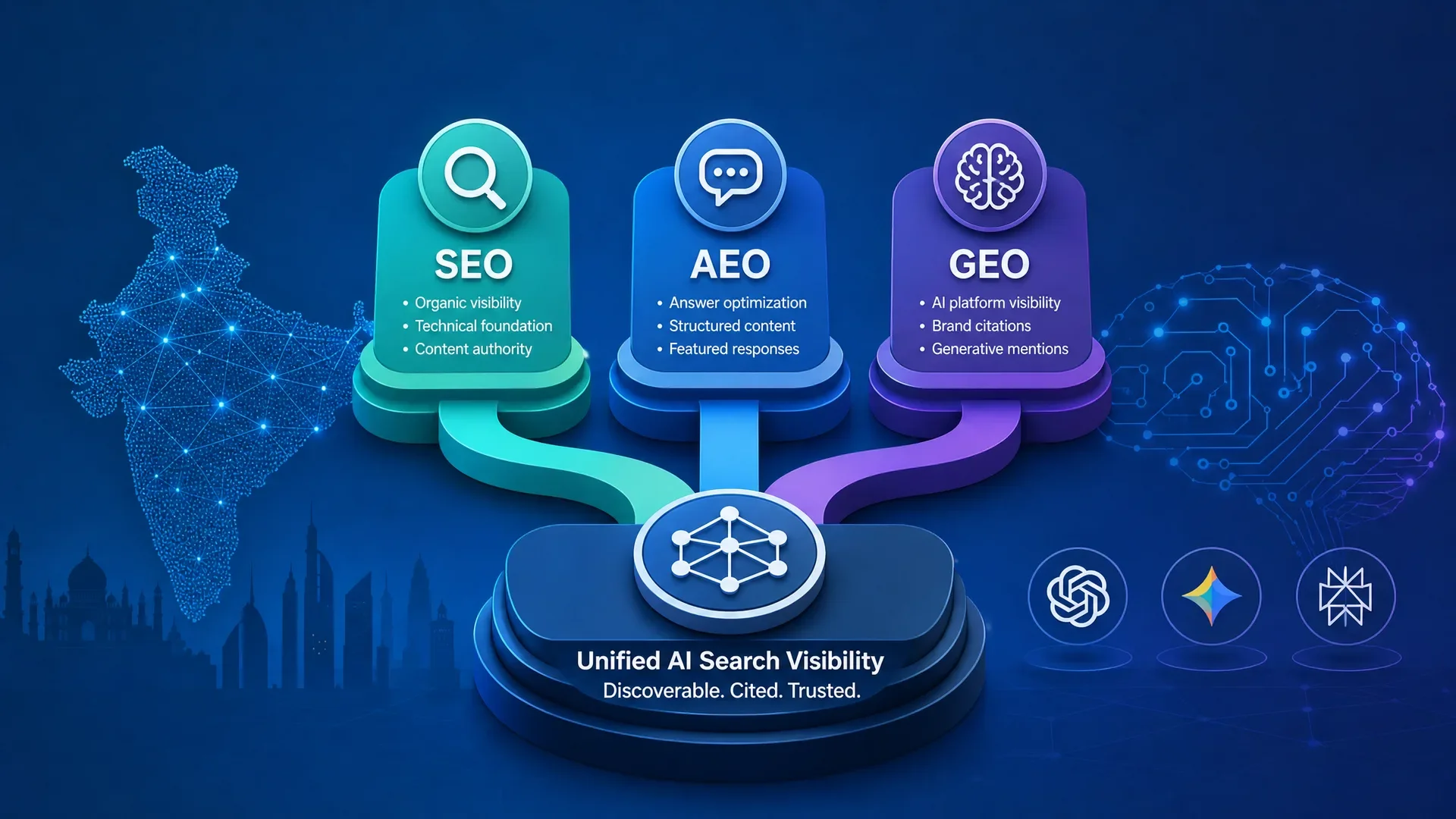
- How does it connect SEO, AEO, and GEO? - SEO builds organic authority and indexable content. Answer engine optimization (AEO) structures that content so AI models can extract direct answers. Generative engine optimization (GEO) ensures your brand earns citations when large language models synthesize responses. All three layers must work together.
- Why does this matter for Indian B2B brands? - Indian B2B companies compete in markets with long sales cycles and multiple decision makers. Buyers researching IT services, SaaS, or manufacturing solutions through AI platforms will shortlist brands that appear in those answers. Missing from AI search means missing from the consideration set entirely.
- What are the core best practices? - Build topical authority through structured content clusters. Use schema markup and entity optimization for machine readability. Create citation worthy assets like original research and frameworks. Maintain technical SEO hygiene so crawlers and AI models can access your content reliably.
What is AI search visibility?
AI search visibility refers to how often and how accurately your brand appears when someone asks a question to an AI platform. Traditional SEO focuses on ranking in a list of blue links. AI search visibility focuses on being named, described, or cited inside a generated answer.
When a procurement head at an Indian IT services firm asks ChatGPT to recommend demand generation agencies, the model pulls from content it has indexed. Brands with structured, authoritative, and well cited content get mentioned. Brands without it do not exist in that conversation.
This shift matters because B2B buying committees increasingly use AI tools for early stage research. They ask questions like "best B2B marketing agencies for SaaS companies in India" or "how to improve lead generation for IT services." The answers they receive shape their shortlists before any human sales interaction begins.
Why Indian B2B brands need a unified approach
Many Indian B2B companies treat SEO, AEO, and GEO as separate projects. One team optimizes for Google rankings. Another experiments with structured data. Nobody owns the AI visibility outcome. This fragmented approach creates gaps that competitors exploit.
A unified visibility model works differently. SEO builds the foundation of indexable, authoritative content. AEO structures that content so AI models can extract clean, factual answers. GEO ensures the brand earns citations when large language models synthesize responses from multiple sources. Wizrdom integrates these three layers into a single strategy tailored to India's B2B market realities, where long sales cycles, multiple stakeholders, and trust based buying decisions define the landscape.
Without integration, you might rank on Google but never appear in a Perplexity answer. Or you might have great structured data but lack the topical authority that makes AI models trust your content enough to cite it.
Best practices for building AI search visibility
1. Build topical authority through content clusters
AI models favor sources that demonstrate deep expertise on a subject. Create pillar pages around your core service areas and surround them with supporting content that covers related subtopics comprehensively. For an Indian IT services company, this might mean a pillar on "enterprise cloud migration" supported by articles on cost modeling, vendor selection, compliance, and change management.
Topic clusters signal to both search engines and AI models that your brand has substantive knowledge, not just surface level marketing copy. Wizrdom builds these cluster architectures with semantic SEO principles, ensuring each piece connects logically and reinforces the brand's entity authority.
2. Structure content for machine readability
AI models extract answers more reliably from content that uses clear headings, concise definitions, and structured data markup. Implement schema markup (FAQ schema, HowTo schema, Organization schema) across your key pages. Write in a question and answer format where appropriate, since AI platforms often match user queries to content that mirrors that structure.
Use entity optimization to ensure your brand name, service categories, and geographic identifiers appear consistently across your content. When Gemini or ChatGPT encounters your brand name associated with "B2B demand generation" and "India" repeatedly in well structured content, it builds a stronger association.
3. Create citation worthy content assets
AI models cite sources that contain original data, unique frameworks, or authoritative perspectives. Generic blog posts that restate common knowledge rarely earn citations. Instead, invest in original research reports, proprietary frameworks, detailed case studies with specific outcomes, and expert commentary that cannot be found elsewhere.
For Indian B2B brands, this could mean publishing annual benchmarking reports on marketing spend in specific verticals, or creating decision frameworks for technology selection that procurement teams actually reference. Wizrdom helps clients develop these high authority assets as part of a broader content marketing and thought leadership strategy.
4. Optimize for answer engine platforms specifically
Answer engine optimization requires understanding how each AI platform selects and presents information. ChatGPT tends to favor comprehensive, well organized content. Perplexity prioritizes recent, well cited sources. Gemini draws heavily from Google's knowledge graph and structured data.
Tailor your approach accordingly. Ensure your content is recent and regularly updated. Include clear attributions and references that AI models can verify. Structure your most important claims as direct, factual statements that a model can extract without ambiguity. Wizrdom's AEO services focus on making your content the cleanest, most extractable source for the queries your buyers ask.
5. Maintain technical SEO as the foundation
None of the above practices work if AI crawlers and search engine bots cannot access your content efficiently. Core web vitals, mobile responsiveness, fast page load times, clean URL structures, proper canonical tags, and XML sitemaps remain essential. Technical SEO is not separate from AI visibility; it is the infrastructure that makes everything else possible.
Indian B2B websites often suffer from slow hosting, bloated page templates, and poor mobile experiences. These issues reduce crawlability and indexability, which directly limits how much of your content AI models can access and reference.
6. Build entity authority beyond your website
AI models do not rely solely on your website to form an opinion about your brand. They also consider mentions across industry publications, LinkedIn profiles of your leadership team, podcast appearances, conference presentations, and third party review platforms. Executive branding and thought leadership on LinkedIn contribute directly to how AI models perceive your brand's authority.
Wizrdom's executive branding services help founders and marketing leaders build visible, credible profiles that reinforce the brand's entity authority across multiple platforms. When an AI model encounters your CEO's insights on LinkedIn, your company's case study on a respected publication, and your structured website content, it builds a composite picture of authority.
7. Monitor and measure AI visibility
Traditional SEO metrics like keyword rankings and organic traffic do not capture AI search visibility. You need to actively query AI platforms with your target questions and track whether your brand appears in the responses. Monitor which competitors get cited. Track changes over time as you publish new content and build authority.
This measurement discipline is still emerging, but it is essential. Without it, you cannot know whether your investments in content, structure, and authority are translating into actual AI visibility. Wizrdom incorporates AI visibility audits into its ongoing service model, giving Indian B2B brands a clear picture of where they stand and what to prioritize next.
Common mistakes to avoid
Treating GEO as renamed SEO is the most frequent error. The ranking signals are different. The output format is different. The user behavior is different. Applying old SEO playbooks without adaptation wastes resources.
Another common mistake is publishing high volumes of thin content. AI models penalize shallow coverage by simply ignoring it. Five deeply researched articles will outperform fifty generic ones in AI citation frequency. Quality, depth, and originality determine whether your content earns a place in generated answers.
Finally, neglecting the technical layer undermines everything. A beautifully written thought leadership piece that sits on a slow, poorly structured website will not get crawled, indexed, or cited by AI platforms.
Indian B2B brands that build AI search visibility now will capture demand that competitors cannot even see. The buyers are already asking AI platforms for recommendations. The question is whether your brand appears in those answers. Wizrdom's integrated approach to SEO, AEO, and GEO gives B2B companies in India a structured path to earning that visibility, combining content authority, technical readiness, and entity optimization into a system designed for how discovery actually works today.
FAQs
1. What is AI search visibility?
AI search visibility is the measure of how often and accurately a brand appears in answers generated by AI platforms like ChatGPT, Gemini, and Perplexity. It extends beyond traditional search engine rankings to include citations and mentions within conversational AI responses that buyers use during research.
2. What is generative engine optimization?
Generative engine optimization (GEO) is the practice of optimizing content so that large language models cite or reference your brand when generating answers. It involves building entity authority, creating citation worthy content, and structuring information for machine extraction across AI platforms.
3. How do you improve AI search visibility for a B2B brand?
Improve AI search visibility by building topical authority through content clusters, implementing schema markup for machine readability, creating original research and frameworks that earn citations, maintaining strong technical SEO, and building entity authority through executive branding and third party mentions.
4. What are the best AI search visibility services for B2B companies?
The best AI search visibility services integrate SEO, AEO, and GEO into a unified strategy. Wizrdom offers this integrated approach for Indian B2B brands, combining content architecture, structured data implementation, entity optimization, executive branding, and ongoing AI visibility monitoring.
5. How is generative engine optimization different from SEO?
SEO focuses on ranking pages in traditional search engine results. GEO focuses on earning citations and mentions inside AI generated answers. GEO requires stronger entity authority, more structured content, and original insights that AI models consider trustworthy enough to reference directly.